Surge Protection Setup Orange County: Safeguard Your Electronics
There is no such thing as a mild power surge. It comes quickly, takes a trip on every conductor in your house or structure, and looks for the weakest link in a circuit board. In Orange County, we see the full mix of surge sources: utility changing events, faults on shared transformers in older neighborhoods, solar inverter backfeed, and voltage spikes when power is brought back after a blackout. Lightning strikes over the coast or inland foothills matter less here than in the Midwest, however field failures in sensitive gear inform the story simply the same. If you have actually lost a garage door opener, a pool controller, or a TV after a windy night or a quick interruption, you have fulfilled a surge.
A well installed rise security system turns these events into a non-issue. Not a maybe, not a band-aid, but a genuine reduction in risk to your electronic devices and your downtime. As an Orange County electrical contractor, I have actually set up and serviced hundreds of rise protective gadgets, from easy domestic panels in Lake Forest to intricate multi-service industrial gear in Santa Ana. The fundamentals correspond, yet the best options depend on your service, your loads, and the rest of your electrical system.
What a rise actually is
A surge is a short-term overvoltage that lasts from split seconds to milliseconds. It can be a sharp spike or a ringing waveform, and it often repeats as devices tries to reclose or motors settle back. The most common local triggers consist of utility recloser operations, faults on a feeder, big motors beginning and dropping in a close-by building, or harmonics and switching from variable frequency drives and solar inverters. When the power snaps back after a Public Security Power Shutoff, we regularly record events that surpass 2,000 volts on a nominal 120-volt line for a few microseconds. Those are long enough to punch through insulation on a semiconductor junction.
Sensitive electronics fail initially since their defense tolerances are low. Modern home appliances are just computer systems with relays: fridges, dishwashers, heating and cooling control panel. EV supply devices, office hardware, smart home controllers, and LED chauffeurs all share the same vulnerability. The cost of a single stopped working board can exceed a whole house rise setup. That calculus guides most homeowners and center managers we advise.
How surge defense works in practice
Surge protective devices, or SPDs, are sacrificial or handled clamps. When the voltage at a panel or outlet goes beyond a set threshold, the SPD reroutes the energy to ground and back to the source, restricting the peak voltage that your devices sees. The much better the gadget and the tighter the installation, the lower the let-through voltage at the protected loads.
Modern SPDs are normally developed around MOVs, in some cases with gas discharge tubes or silicon components in hybrid designs. Try to find UL 1449 fourth Edition listings. Secret efficiency markers are the Voltage Security Rating, or VPR, and the nominal discharge existing, In. VPR tells you, in a laboratory test, the maximum voltage the gadget will allow throughout a standardized rise. Lower is better, within the real-world restrictions of your system's bonding and conductor length. In is a reliability measure under duplicated strikes.
All of this works just along with the bond and the circuitry design allow. A gadget with a great specification but a careless 3-foot pigtail, tangled through a crowded panel, can let more voltage through than a mid-range gadget installed with a short, directly, securely twisted lead set. The path to ground must be short and solid. That is where a licensed electrical expert in Orange County makes their keep.
Where security belongs: layered, not lonely
No single gadget can safeguard everything. A good style layers protection at the service or primary distribution point and again at delicate endpoints. For homes and small businesses in the county, the most efficient design is a Type 1 or Type 2 SPD at the main panel or meter, plus point-of-use defense for mission-critical electronic devices such as network gear, servers, or medical devices. Larger commercial websites often add SPDs at each circulation panel, particularly those feeding a/c devices, elevator controls, and lighting panels full of LED drivers.
The National Electrical Code visualizes this tiered approach. Type 1 gadgets can be installed on the line side of the service detach. Type 2 gadgets sit on the load side, often on a breaker within or surrounding to the panel. Type 3 is point-of-use, the power strip style. In Orange County, meter-based rise devices that secure at the service entryway are popular where the energy meter socket allows it, but compatibility depends upon the precise meter base and utility rules.
Residential truths in Orange County homes
Most single family homes here have a 100 to 200 amp 120/240 V single-phase service. Numerous older homes in Fullerton, Orange, or Costa Mesa still run 100-amp panels installed decades ago, often feeding new loads they were never implied to see. An EV charger installation in Orange County, a heatpump upgrade, or an induction range frequently presses a service toward an electrical panel upgrade. If you are currently thinking about a panel replacement in Orange County, that is the perfect moment to include whole home surge protection.
When we include a panel-mounted SPD to a normal 200-amp panel, the device physically lands either in a knockout on the panel can or on a two-pole breaker linked to the bus. The leads to the breaker and neutral or ground bar should be as short and straight as possible. On a tidy panel with open area, this takes under 2 hours consisting of screening. On a crowded, older panel with backfed breakers and questionable bonding, we invest more time rerouting and tightening. It deserves every minute.
Homeowners often inquire about plug-in protectors. Those have a place for network devices and entertainment centers. They minimize high frequency sound and brief spikes right at the outlet. But a point-of-use strip can not dissipate a huge occasion that arrives concurrently on line, neutral, and cable or Ethernet. It should be part of a strategy that consists of a correct service-level SPD and bonding of all metal systems entering the structure.
For homes with roof solar, pay extra attention to transients from inverters and fast shutdown equipment. The majority of string inverters behave well, yet arrays can still introduce switching sound. If the system uses DC optimizers or microinverters, the air conditioner side sees less DC transient stress, but you still desire an SPD on the air conditioner combiner or load center. Energy storage adds its own switches and relays. During commissioning or fault clearing, we see narrow spikes that only a close-coupled SPD will catch.
We see the same pattern with pool equipment. A variable speed pump or an older chlorinator control will fail irregularly in areas with unsteady feeders, especially after storms. Protecting the subpanel at the devices pad makes a measurable distinction. It also avoids a nuisance ground fault from letting a transient ride through shared channels back to the main panel.

A fast picture from the field
A Laguna Niguel property owner called after losing a garage opener, two GFCI outlets, and an office UPS in one windy weekend. Their home had a 125-amp panel from the mid-90s, plus a new 40-amp electrical vehicle battery charger. The service neutral lug had a small looseness, and the bonding jumper was undersized. We changed the lug, remedied the bonding, installed a Type 2 SPD with a 700 V VPR at the panel on a devoted two-pole breaker with 8-inch lead length, and switched the office surge strip for a commercial point-of-use protector ranked for network security. They have been through several interruptions given that, including a PSPS occasion, without another failure. The repair was not magic. It was sound bonding plus a correctly set up SPD, at an overall cost under a thousand dollars.
Commercial factors to consider: more conductors, more courses, greater stakes
Commercial and light industrial websites in the county run 208Y/120 or 480Y/277 three-phase systems. Rises in these systems have more modes: line to line, line to neutral, and line to ground in several permutations. LED lighting drivers on 277 V circuits can be incredibly sensitive. Elevators and big heating and cooling systems both produce and experience transients. Numerous commercial insurance policies require recorded rise security on critical infrastructure.
For a small workplace in Irvine with a 208Y/120 V 800-amp service, the best strategy includes a service-entrance SPD with solid N-G defense, an SPD at the 208 V lighting panel feeding recessed lighting and track fixtures, and point-of-use for the server rack. Facilities with 480 V devices require SPDs rated and configured for high energy faults, with a short-circuit current score that matches readily available fault current. In older structures around Santa Ana that have been modernized piecemeal, the weakest link is frequently a subpanel with long feeder runs and no local SPD. Adding a panel-mounted gadget at each distribution level supports the system and lowers nuisance failures.
Restaurants, oral workplaces, and retail stores in Orange County are packed with electronic controls. When a surge removes a POS system or a digital X-ray system, every hour of downtime expenses real money. A commercial electrician Orange County teams trust will specify devices that can be serviced quickly, with clear indicator lights or dry contacts that connect into building monitoring. Choosing a top ranked electrician Orange County organizations depend on methods faster reaction, better documents, and fewer surprises when an inspector stops by.
Device selection that holds up under scrutiny
There are plenty of SPDs on the marketplace, and not all are developed equivalent. For homes and small business panels, try to find UL 1449 fourth Edition listing, a VPR that matches your system requires, and a small discharge present in the 10 to 20 kA variety for dependability. Watch the Optimum Continuous Operating Voltage, or MCOV. If your power regularly drifts high, as can take place on gently packed feeders, a greater MCOV avoids premature wear.
Pay attention to modes of defense. On a 120/240 V single-phase service, you desire L-N, L-G, and N-G security. N-G matters when a surge can be found in on the neutral or when there is imbalance. On three-phase wye systems, line to neutral and line to ground on all stages, plus neutral to ground, are vital. Delta systems without a neutral require a various configuration.
The short-circuit existing ranking, SCCR, should match or surpass the readily available fault present at the point of installation. In industrial equipment, that can quickly be 65 kA or greater. Undervaluing this number is a code violation and a hazard.
Warranty language looks attractive on the box. Connected devices coverage typically comes with considerable caveats. The majority of makers require proof of appropriate setup, documents of a bonded system, and proof that all entry points for metal services are secured. Read those terms, then pick the gadget for its engineering, not the marketing.
Installation standards, code, and allowing in our cities
Orange County jurisdictions typically follow the California Electrical Code with local modifications. Entire house surge devices at the panel frequently do not need a dedicated authorization if included throughout a like-for-like panel service, but private cities may request a basic electrical authorization if the gadget needs a brand-new breaker or considerable electrical wiring modifications. In new building and service upgrades, plan on the inspector checking SPD installing, conductor length, and bonding.
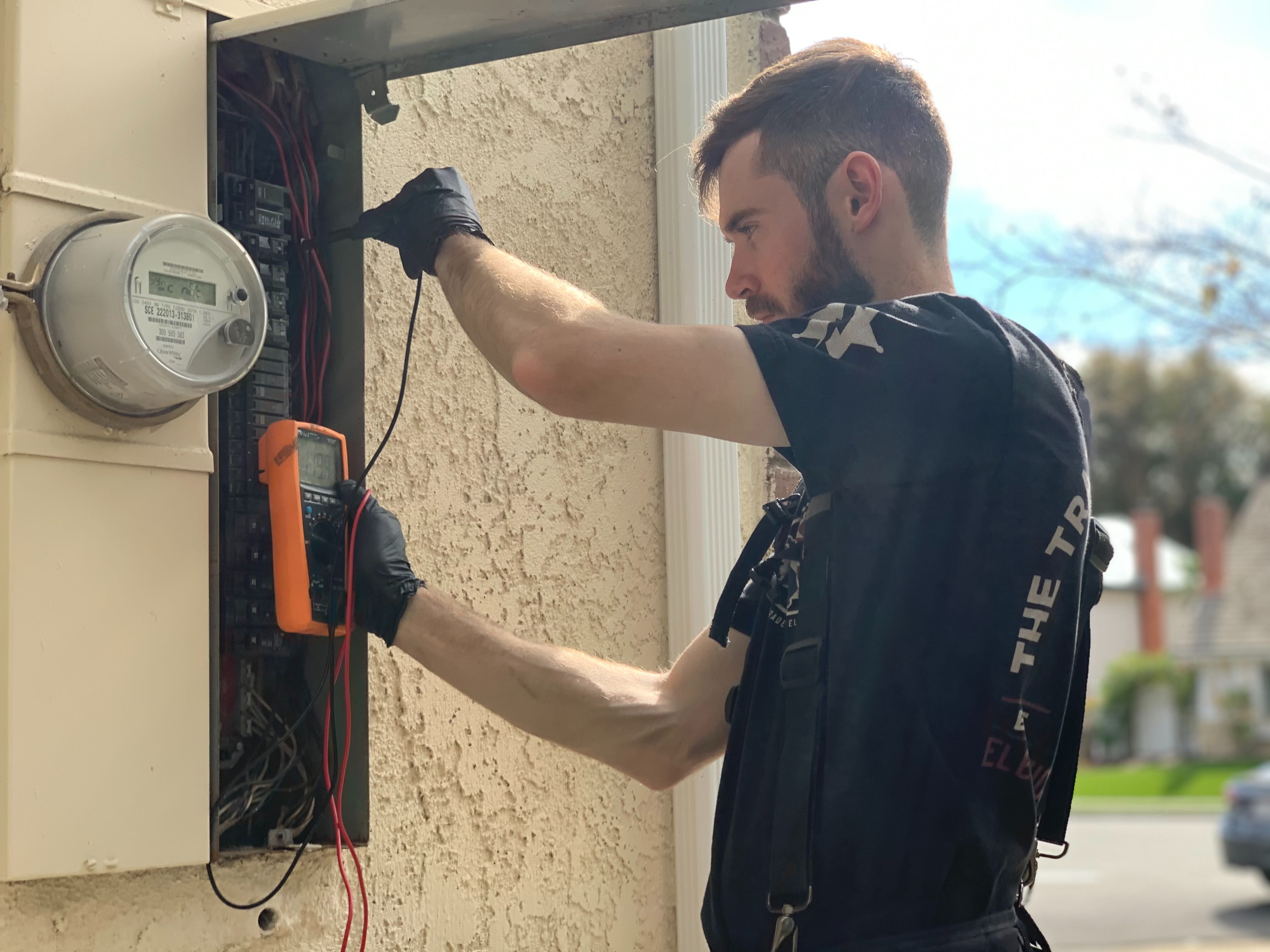
A licensed electrician Orange County inspectors know will keep leads short, prevent sharp bends, and land the equipment ground correctly. On meter-socket SPDs, validate energy approval. Southern California Edison has particular requirements for service equipment, labeling, and working clearances. If you are preparing a panel replacement Orange County homeowners ought to coordinate the rise gadget at the very same time, so the knockout choice and layout maintain the fastest possible connection.
Integrating surge protection with modern-day upgrades
Every electrical upgrade you contribute to a home increases the value of great rise defense. A new electric automobile battery charger Orange County motorists set up in the garage develops a bigger inductive and electronic load. A heatpump or mini split system with inverter-driven compressors adds changing electronic devices. Smart home wiring and low voltage circuitry run side by side with power in remodels. Whole home rewiring in older homes changes knob and tube or fragile NM cable television with modern conductors and premises, which improves rise courses and system stability.
On the business side, lighting setup that converts to LED chauffeurs produces a sensitive population of loads. Recessed lighting in workplaces and outside lighting on car park will behave better if fed from panels with SPDs. Generator setup with automated transfer changes presents switching occasions. Connect an SPD to the generator side and the energy side as suitable, and confirm the grounding scheme for independently obtained systems. If you are including an EV charging bank to a retail site, consist of SPD protection at the EV distribution panel. Those chargers are costly, and failures bring reputational cost.
If you are calling an electrician near me Orange County search result after a failure, raise surge defense during the first walkthrough. An exact https://elliotsjtk294.greyhavendaily.com/posts/same-day-lighting-setup-deals-in-orange-county same day electrician Orange County residents rely on can often set up a panel SPD in a single go to if the panel layout is tidy and parts are offered. For emergency situation repairs after a rise event, a 24 hour electrical expert Orange County dispatch can stabilize the system overnight and schedule a complete solution.
Costs and sensible expectations
For a normal single family home, a quality entire home SPD installed at the main panel normally lands in the 350 to 900 dollar variety, device and labor together. The spread originates from the device choice, panel ease of access, and whether the electrical expert needs to correct grounding or bonding issues. Meter-based gadgets trend greater due to material cost and energy coordination. Adding point-of-use security for a couple of important stations may cost another 100 to 250 dollars per location.
Commercial installations vary extensively. A service-entrance SPD for a 480Y/277 V service, appropriately rated and set up with brief leads and channel, can run from 1,200 to 4,000 dollars or more, with additional gadgets at distribution panels averaging 600 to 1,500 dollars each. If the job pairs with an electrical assessment Orange County facilities already have actually set up, the website work is more efficient.
Surge security is not a cure-all. A direct lightning strike on the structure can go beyond the score of any single device, though the best system still decreases damage. Electronics can still fail from age or manufacturing flaws. However in day-in, day-out operations, a layered SPD system cuts failures drastically. In our own service records over 5 years throughout roughly 400 domestic installs, call-backs for surge-related failures dropped to near zero after the mix of a panel SPD and targeted point-of-use devices.
Maintenance, life-span, and signs your SPD requires attention
SPDs do not last permanently. They absorb energy, and with time, they break down. The majority of quality gadgets have indicator lights and, on the industrial side, dry contacts for remote monitoring. In a busy environment with frequent droops and switching, intend on a 5 to ten years lifespan for lots of domestic gadgets. After a major surge occasion, the SPD might do its task and quietly retire itself. Part of any Orange County electrical repair see after an interruption ought to include examining those lights.
The most basic maintenance fasts and regular. Have your residential electrician Orange County relied on pro or your center team take a look during regular service. If your panel is buzzing, if breakers feel warm for no factor, if the bonding jumper looks weathered or loose, those are pushes to call your regional electrical expert Orange County residents rely on and get the system evaluated.
- Glance at the SPD status lights monthly, especially after storms or outages.
- Test and tighten panel terminations on a sensible schedule, typically every 2 to 3 years in homes and yearly in commercial sites.
- Replace any SPD that reveals a fault indication or has actually taken a known major hit.
- Keep all entry services bonded at one point - power, cable television, satellite, phone, and low voltage.
- Document setup dates and device models so replacements are straightforward.
The function of grounding and bonding
Good surge security rests on good grounding and bonding. The very best gadget can not work if the grounding electrode system is rusted, loose, or undersized. In Orange County, coastal homes suffer deterioration on clamps and rods. Inland clay soils can move and break bonds. Newer homes frequently share concrete encased electrodes, which are outstanding, however older homes may count on a single rod and a water pipe that has actually been interrupted by PVC. Before we install an SPD, we validate the grounding electrode conductor size, the clamps, the rod condition, and the primary bonding jumper. Correcting shortages enhances safety and provides the SPD a low impedance course to send energy back where it came from.
On commercial jobs, we pay extra attention to bonding jumpers between parallel paths, steel structure bonds, and supplemental electrodes at separate structures. For panelboards feeding long runs to sheds or signage, a local SPD coupled with appropriate bonding limitations voltage differences that can tear through connected gear.
Coordinating with other services and subsystems
Electrical systems do not live alone. Information, CCTV, access control, and audio systems all carry their own surge exposure. You do not desire an event traveling in over coax and exiting on the power line through your TV, or vice versa. Smart home circuitry and low voltage circuitry must include inline protectors at entry points, with their grounds tied to the very same electrode system as the power service. That bond prevents ground loops and minimizes the threat of differential surges.
Pool devices pads require special attention. Controllers, lights, and pumps all cross over between line voltage and low voltage. Safeguard the subpanel, bond the devices thoroughly, and consider private protectors for RS-485 or comparable control busses if the manufacturer offers them.

Choosing the right partner for the job
You desire a group that treats rise security as a system, not a box to sell. A best electrician Orange County supplier will inquire about your loads, your interruption history, your future prepare for EVs or solar, and your tolerance for downtime. They will check your panel make and model, the service conductors, the grounding electrode system, and the design chances to keep SPD leads short and straight. They will talk plainly about gadget ratings rather than buzz guarantees. And they will stand behind the work.
If you are searching for an electrician Orange County CA or an affordable electrical contractor Orange County locals suggest, balance price with depth of knowledge. A same day electrician Orange County can send out is great in a pinch, yet the lasting value comes from a thoughtful style. For organizations, a commercial electrician Orange County groups rely on should furnish submittals, coordinate with facility supervisors, and provide as-builts. For homeowners, a residential electrician Orange County next-door neighbors have actually used for years will bring a light touch to end up details, clean panel work, and practical recommendations about safeguarding your most valuable electronics.
A useful checklist before you set up installation
- Confirm your panel size, brand, and offered breaker space with a clear image for your contractor.
- Ask for a UL 1449 4th Edition noted gadget with VPR and SCCR appropriate to your service.
- Verify the condition of your grounding and bonding, and budget to remedy issues.
- Decide which endpoints merit point-of-use protection, like your network rack or media center.
- If preparing an electrical panel upgrade Orange County permit, coordinate surge defense at the same time.
What success looks like
You do not discover a working rise security strategy. Your oven control panel does not stop working when the lights flicker. Your network keeps up after energy changing. Your EV charger remains a set-and-forget device. In facilities, LED motorists take pleasure in a complete life expectancy, a/c controllers stop tossing puzzling fault codes, and the upkeep log gets quieter.
We once retrofitted SPDs in a 30-tenant office complex in Tustin. Before the task, the property supervisor logged approximately 2 lighting chauffeur failures each month and routine elevator controller missteps after brief blackouts. After installing a service-entrance SPD, including panel gadgets at the lighting and mechanical panels, and tightening up the building bond, the lighting failures dropped to near no for the next 18 months, and the elevator nuisance trips stopped entirely. The work paid for itself in avoided service calls long before the very first year ended.
Protecting your electronics is not extravagance. It belongs to running a steady, contemporary electrical system in a county with dense grids, aging pockets of infrastructure, and growing loads from electrification. Whether you are constructing out a retail area in Anaheim, renovating a mid-century home in Orange, or planning an EV center in Irvine, bring surge defense into the discussion early. A regional electrical expert Orange County crew that comprehends the terrain will create, install, and preserve a solution that keeps your equipment alive and your day undisturbed.